
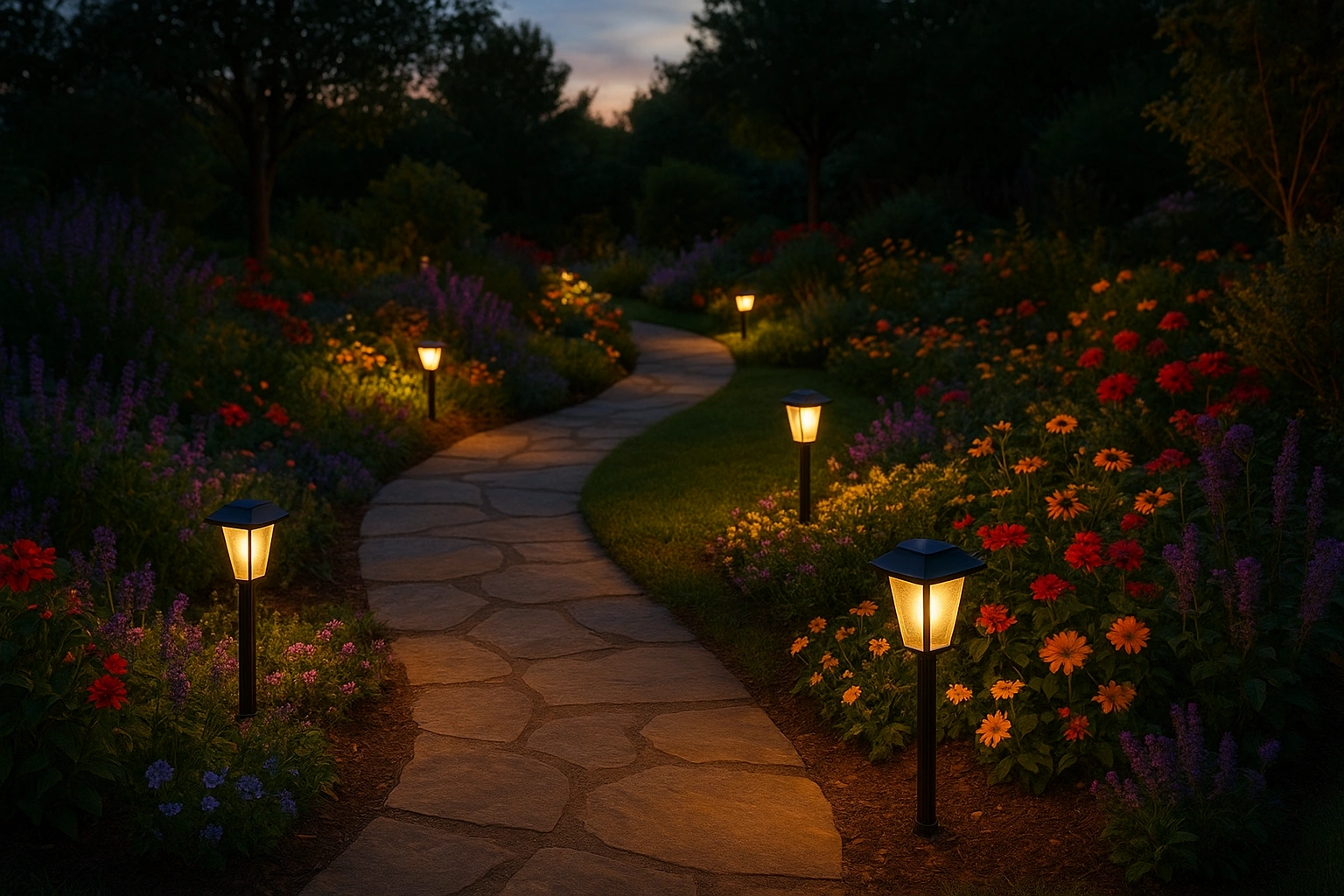
You’ve spent countless hours perfecting your garden and patio. But when the sun goes down, does it all disappear into a dark, uninviting void? Solar smart lights can change that, letting you illuminate your outdoor space effortlessly. With solar smart lights, there’s no need for hazardous extension cords across the lawn, and solar smart lights eliminate the cost of hiring an electrician for permanent wiring. By choosing solar smart lights, you get a safe, eco-friendly solution that brings your yard to life every evening.
This definitive guide will explore how these innovative lights work, their incredible benefits for your wallet and the planet, and how to choose the perfect system to transform your outdoor space into a vibrant, intelligent oasis.
What Are Solar Smart Outdoor Lights?
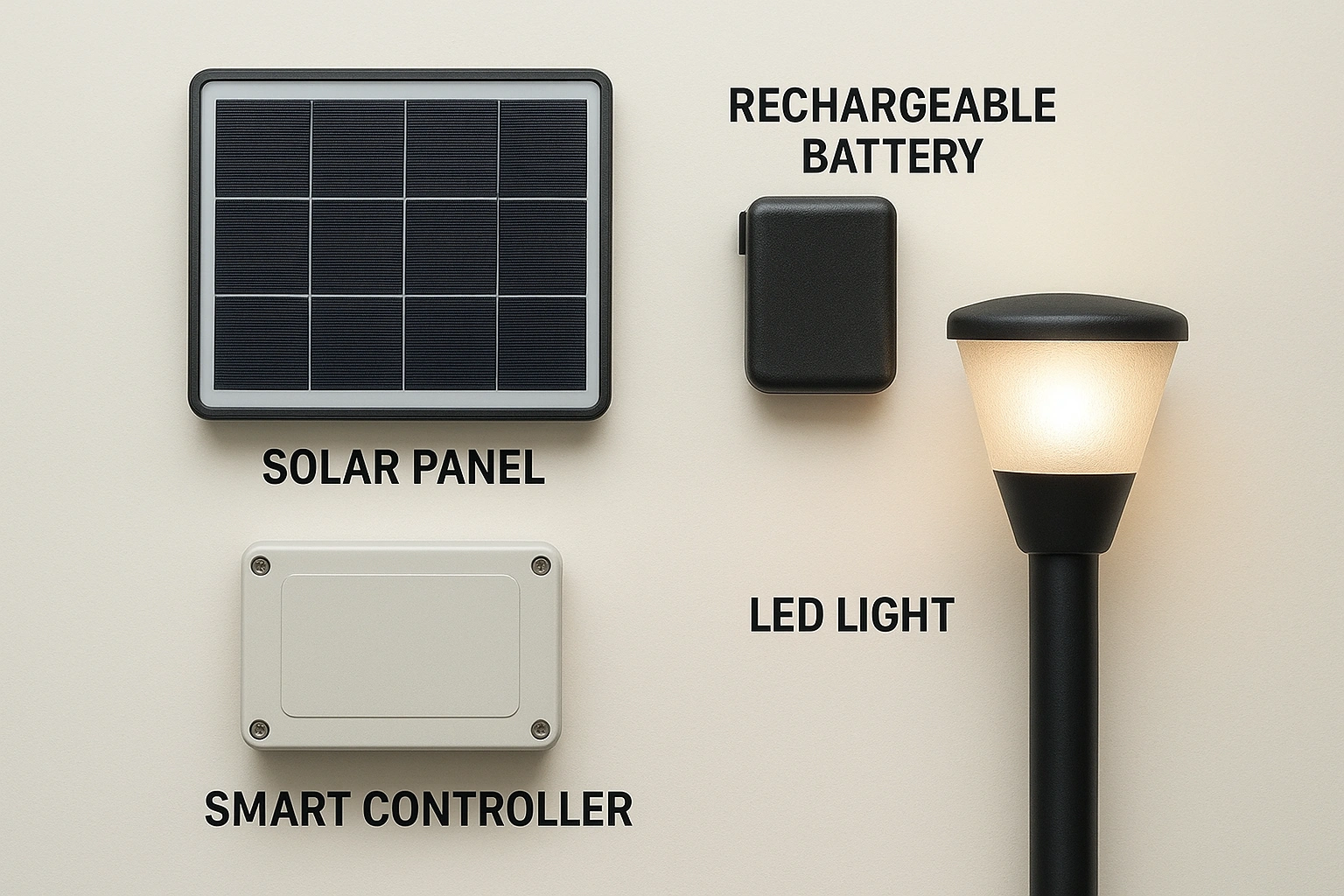
Solar smart lights are self-contained, weatherproof fixtures that bring together four essential technologies: a solar panel to capture sunlight, a rechargeable battery to store energy, an efficient LED to produce bright illumination, and a smart chip for wireless control. With these solar-powered smart lights, you can place them anywhere with sun exposure, operate completely off-grid, and control them directly from your smartphone.
The demand for solar smart lights is booming in 2025, fueled by advances in solar panel efficiency and battery technology. Homeowners are looking for sustainable solutions that don’t compromise on style or functionality. Solar smart outdoor lights offer the perfect mix, providing customizable, app-controlled lighting that uses clean energy. These solar smart lights are no longer the unreliable, dim fixtures of the past—they’re a powerful, modern tool for creating stunning, intelligent landscapes.
The Unbeatable Advantages of Going Solar and Smart
This technology offers a trifecta of benefits that traditional outdoor lighting can’t match.
Zero Electricity Costs and a Greener Footprint
This is the most powerful benefit. Once you buy the lights, the energy is free, courtesy of the sun. You can illuminate your entire property every single night without ever worrying about the impact on your utility bill. This makes them a fantastic long-term investment. Furthermore, you’re reducing your home’s carbon footprint by opting for a 100% renewable energy source.
Ultimate Freedom of Installation
Forget digging trenches, running conduit, or hiring an electrician. The installation process for solar lights is refreshingly simple: find a sunny spot and place your light. This freedom allows you to:
- Easily illuminate remote areas of your yard, like a back fence or a garden shed.
- Experiment with different lighting designs and move lights around as your landscaping changes.
- Install beautiful lighting in rental properties where permanent wiring isn’t an option.
Sophisticated Automation and Ambiance Control
The “smart” aspect unlocks a new level of creativity. Through a smartphone app, you can orchestrate your entire outdoor lighting scheme:
- Scheduling: Set lights to turn on at sunset, dim at midnight, and turn off at sunrise automatically.
- Color Creation: Choose from millions of colors to celebrate holidays, match party themes, or simply create a unique look.
- Dynamic Scenes: Program captivating scenes like a slow color fade, a flickering candlelight effect, or a festive strobe.
This level of control can make your backyard the perfect venue for watching outdoor movies, perhaps even from a site like Kamar Film.
How They Work: A Look Under the Hood
Understanding the components helps you choose a quality product that will perform well and last for years.
- The Solar Panel:This is the engine. Look for monocrystalline panels, which are more efficient at converting sunlight to energy than older polycrystalline types. The physical size of the panel also matters—a larger panel will charge the battery faster and work better on overcast days.
- The Rechargeable Battery:This is the fuel tank. Battery capacity is measured in milliampere-hours (mAh). A higher mAh rating means the light can store more energy and will run longer through the night, especially during winter months with less sunlight.
- The IP Weatherproof Rating:This is crucial for durability. The IP (Ingress Protection) rating tells you how resistant the light is to dust and water. Look for a rating of at least IP65, which means it’s dust-tight and can withstand jets of water (like rain and sprinklers).
- Connectivity:Most solar smart lights use Bluetooth Mesh. This is ideal as it doesn’t require a Wi-Fi signal to reach the far corners of your yard. The lights create their own network, communicating with each other to extend the range of your control.
Real-Life Test: Transforming My Backyard Path and Patio
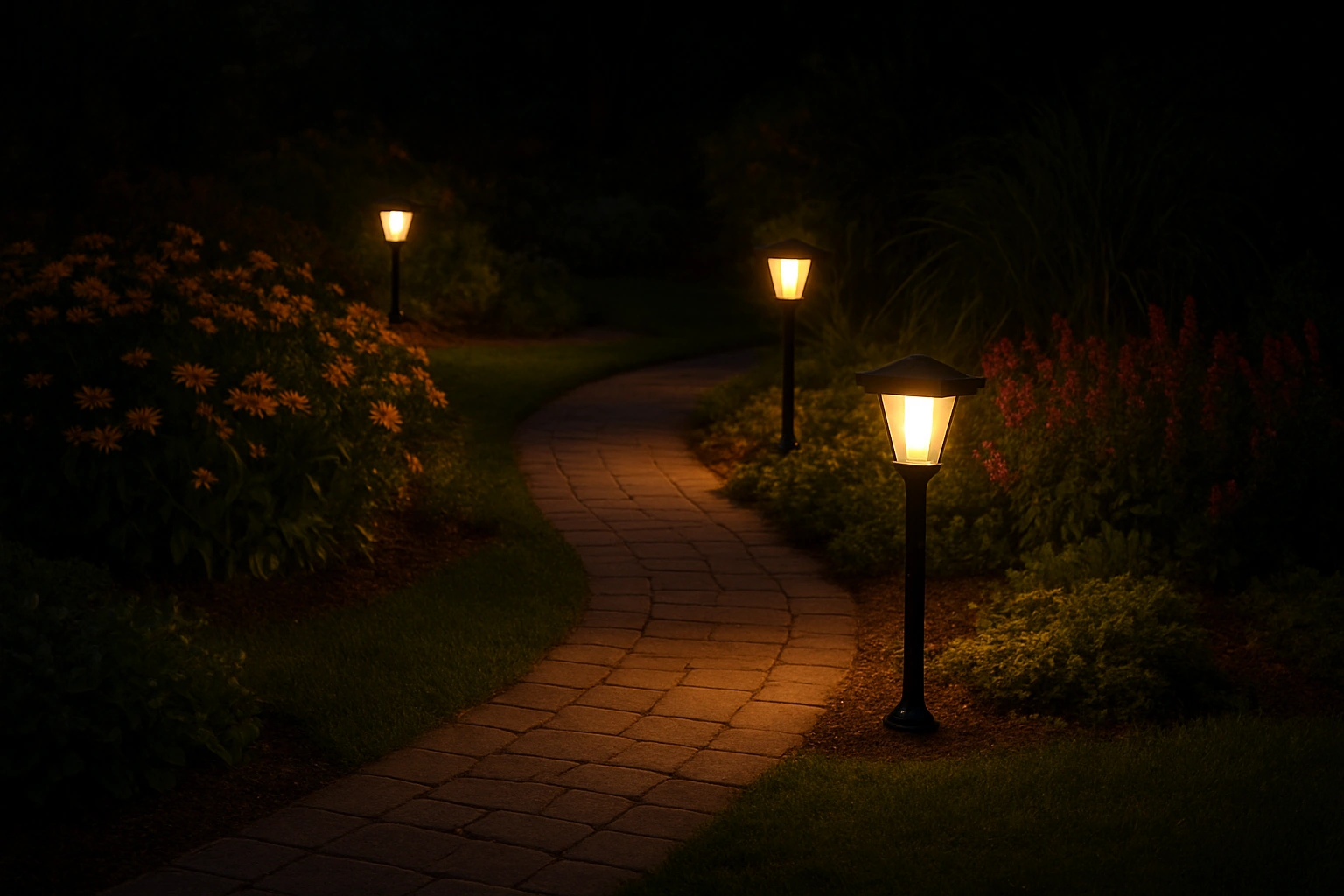
My backyard was a dark, unusable space after sunset. I decided to test a system of fictional “SolaraLink” lights: six **solar walkway lights** and a 50-foot string of solar patio lights.
Installation of the solar smart lights was effortless. I staked the solar pathway lights along my garden path and draped a string of solar smart lights over the pergola. The entire setup took less than 30 minutes. That evening, the solar smart lights transformed the space magically. Using the app, I grouped the walkway lights and set them to a warm, classic white, while the patio solar smart lights ran a slow, calming “Ocean Fade” scene. My yard instantly became a resort-like retreat, all controlled without touching a single wire or switch.
| Pros | Cons |
|---|---|
| Zero running costs and completely eco-friendly | Performance is dependent on getting enough sunlight |
| Incredibly easy and flexible installation | Initial purchase price can be higher than wired lights |
| App control over color and schedules is a game-changer | Brightness may not match powerful hardwired floodlights |
Choosing Your Arsenal: Types of Solar Smart Lights
Different areas of your yard require different types of lighting. Here’s a breakdown of the most popular options:
| Light Type | Primary Use | Features | Best For |
|---|---|---|---|
| Walkway/Path Lights | Marking paths, driveways, and garden edges | Stake-mounted, 360-degree light | Safety, navigation, and defining spaces. |
| Spotlights | Highlighting specific features | Adjustable head, focused beam | Uplighting trees, statues, or architectural details. |
| String Lights | Creating a festive, ambient atmosphere | Multiple bulbs on one strand, various styles | Patios, pergolas, gazebos, and parties. |
| Wall/Fence Lights | Security and accent lighting on vertical surfaces | Mountable, often with down-lighting effect | Mounting on walls, fences, decks, and sheds. |
7 Common Mistakes to Avoid with Solar Lights
Avoid these common errors to ensure your lights shine bright all night:
- Poor Panel Placement: Placing a solar light under a dense tree, a covered porch, or in the shadow of your house is the #1 reason for poor performance. They need several hours of direct sunlight.
- Ignoring the IP Rating: Buying a cheap, IP44-rated light for an area that gets hit by sprinklers will lead to a quick failure. Always buy at least IP65 for exposed areas.
- Unrealistic Brightness Expectations: A small solar path light will not illuminate your entire yard. Match the lumen output to the task—ambient path lights might be 15-50 lumens, while a security light should be 800+.
- Forgetting to Clean the Panels: Over time, solar panels can get covered in dust, pollen, or dirt, which reduces their charging efficiency. Wipe them down with a damp cloth every few months.
- Not Giving an Initial Charge: Before first use, it’s best to turn the lights off and let them charge in the sun for 1-2 full days to ensure the battery reaches its maximum capacity.
- Blocking the Light Sensor: The small sensor that detects darkness can be blocked by a plant leaf or other object, preventing the light from turning on at night.
- Assuming All Batteries Are Equal: Cheaper lights often use lower-quality batteries that degrade quickly. Investing in a reputable brand often means better, longer-lasting batteries.
Expert Tips for a Dazzling Outdoor Display
“Think of your yard as a canvas and your lights as the paint. Use spotlights to create drama by uplighting textured tree bark. Use path lights to guide the eye through the landscape. The smart color features let you change the entire mood of your garden with the seasons.”
— Jennifer Lee, Landscape Designer
- Angle Your Panels: In the Northern Hemisphere, face your solar panels south for maximum sun exposure throughout the day.
- Create Depth with Layers: Place some lights in the foreground (like path lights), some in the mid-ground (illuminating shrubs), and some in the background (uplighting trees) to create a sense of depth.
- Use Color Sparingly: While millions of colors are fun, a well-designed look often uses a classic warm white with just one or two colored lights as accents to highlight a special feature.
- “Moonlight” Effect: Place a cool-white spotlight high up in a tree and aim it downwards. The light filtering through the leaves will create a beautiful, natural moonlight effect on the ground below.
Frequently Asked Questions (FAQ)
How well do solar outdoor lights work on cloudy days or in winter?
Modern solar lights are much more efficient and can still charge on overcast days, though not as effectively as in direct sun. Performance in winter depends on sunlight hours. For reliable year-round use, choose models with high-efficiency panels and large-capacity batteries.
How long do the rechargeable batteries in solar lights last before needing replacement?
Typically, the rechargeable batteries in solar lights last about 2-4 years, or 500-1000 charge cycles. Most models use standard rechargeable batteries (like AA or 18650) that are easy and affordable to replace.
Do I need Wi-Fi in my garden for solar smart lights to work?
Not necessarily. Many solar smart lights use Bluetooth Mesh technology, which allows them to communicate with each other and your phone directly within a certain range (e.g., 50-100 feet), no Wi-Fi needed. Wi-Fi models offer remote control from anywhere but require a signal in your yard.
Can I control all my solar smart lights at once?
Yes. The companion app for your smart lights will allow you to group them together. This lets you control the color, brightness, and schedule of an entire area (like ‘Patio’ or ‘Walkway’) with a single tap.
Are solar smart lights bright enough for security purposes?
While great for ambiance and pathway marking, most decorative solar smart lights are not as bright as hardwired security floodlights. However, many solar-powered security lights with motion sensors are extremely bright (1000+ lumens) and are excellent for deterring intruders.