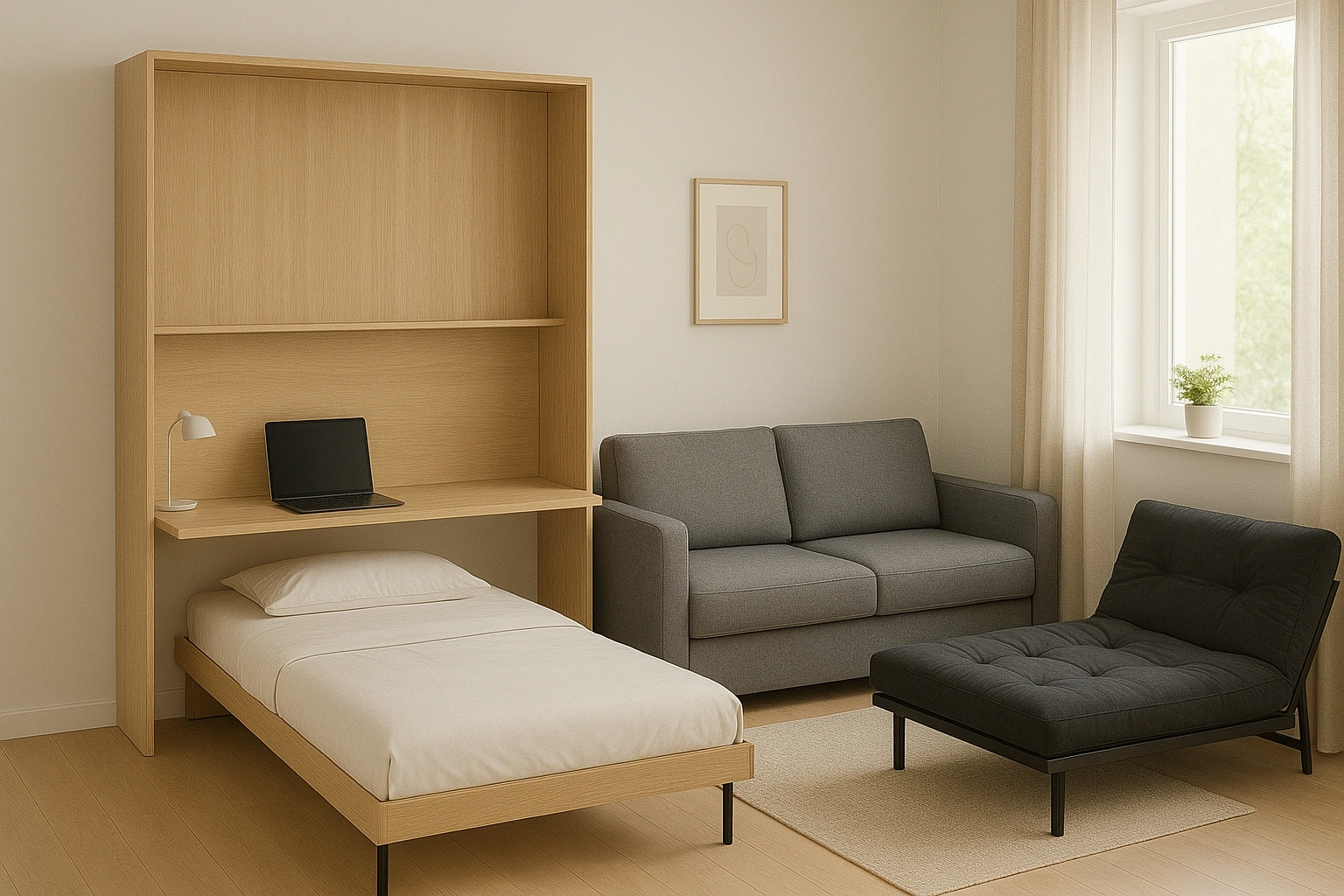
Is your spare room trying to be a home office, a guest bedroom, and a storage closet all at once? The remote work revolution has made this a reality for millions, but the result is often a cramped, chaotic space that fails at all its jobs.
This guide will walk you through everything you need to know about these transformational pieces of furniture. We’ll explore the benefits, key features, and what to avoid, so you can reclaim your room and create a space that’s both productive and peaceful.
What is a Murphy Bed with Desk?
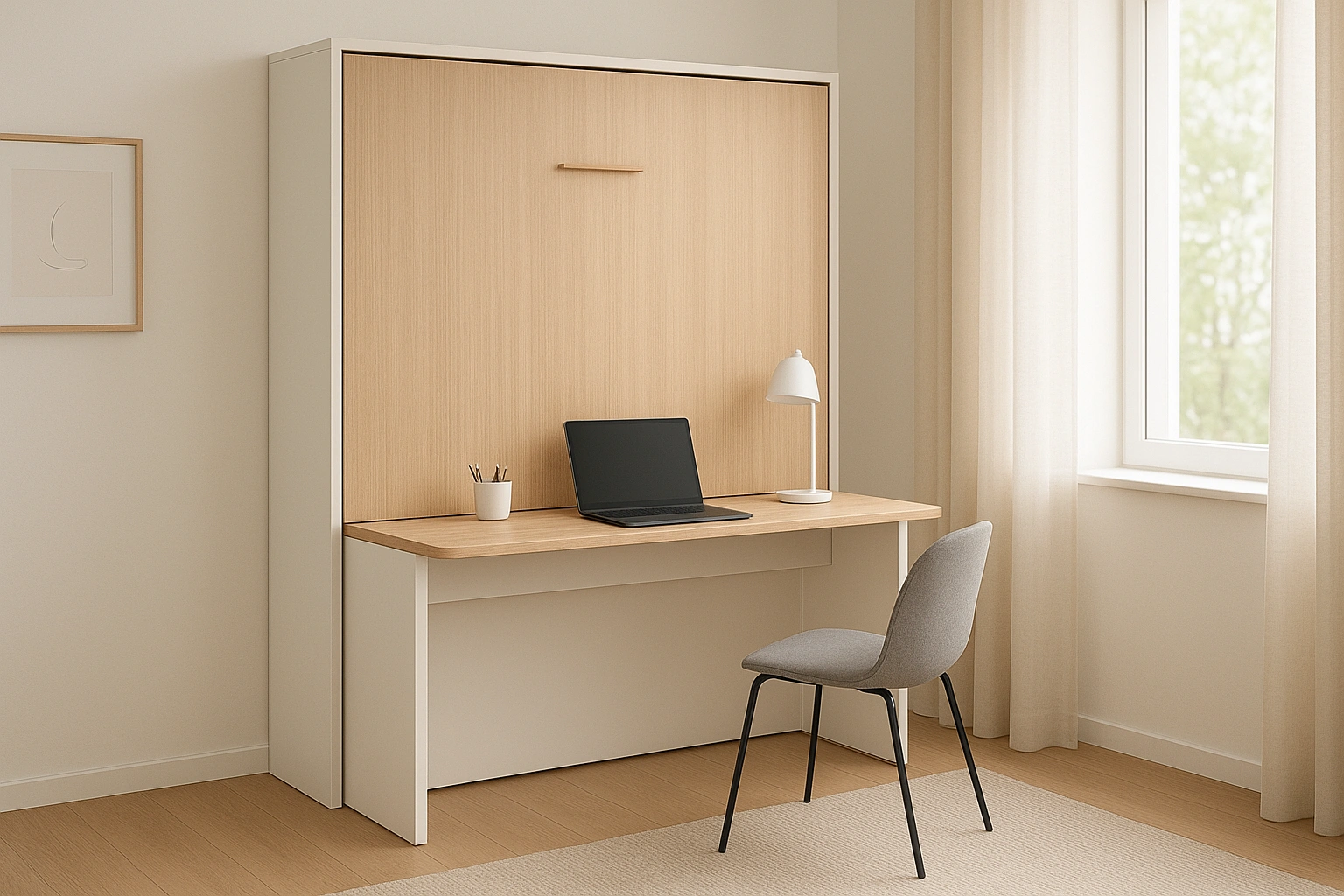
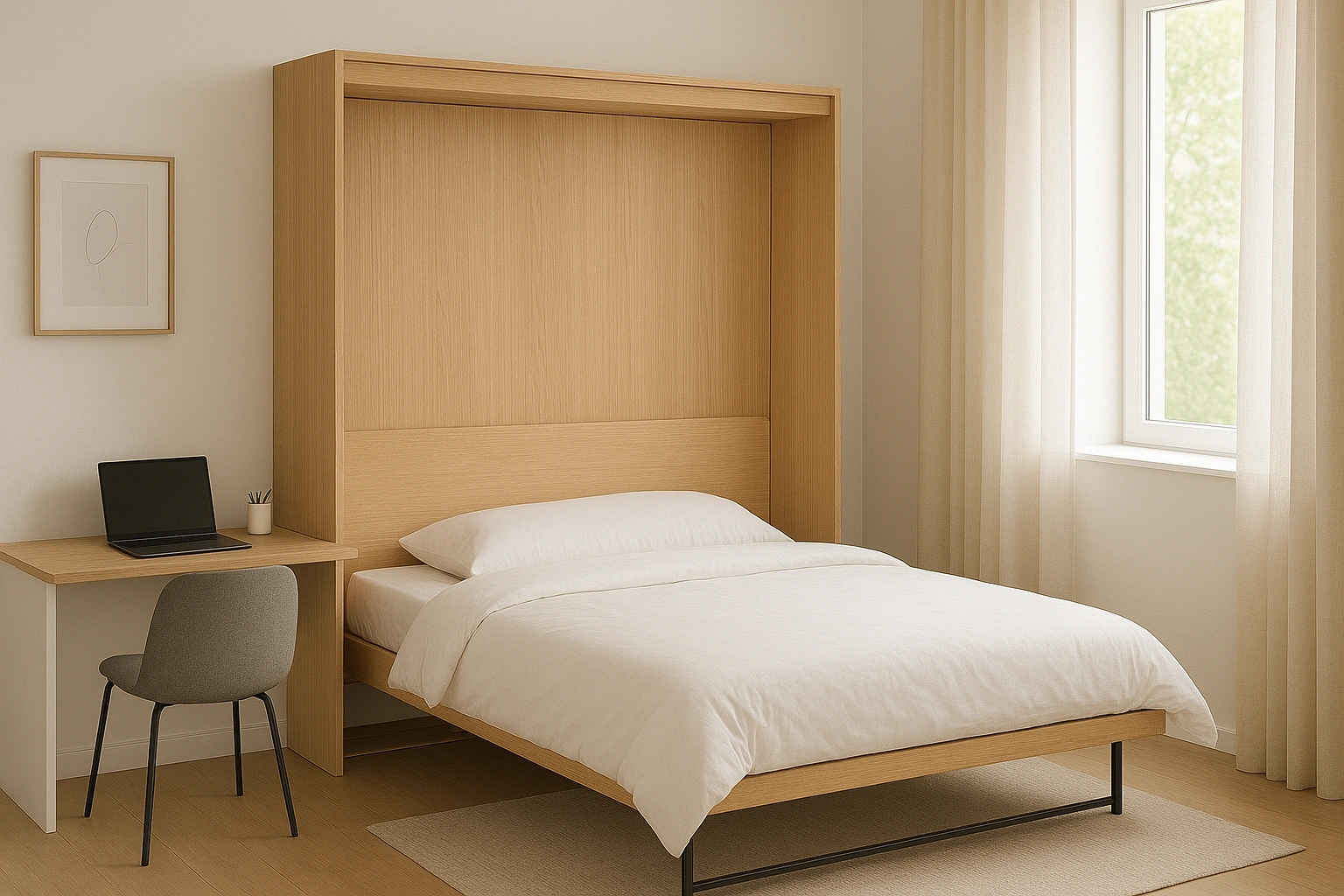
A Murphy Bed with Desk, also known as a wall bed with desk, is an integrated furniture system where a bed cabinet includes a functional desk on its exterior. The bed is hinged at one end to be stored vertically against the wall, and when it’s folded away, it reveals or makes space for a workspace. When it’s time to sleep, the bed folds down, often over the desk itself.
The concept of the fold down bed isn’t new, but its integration with a desk has become a game-changer in the age of remote work. As highlighted by a recent article in Wired, the line between home and office has blurred, forcing homeowners to seek smarter, more flexible furniture. This trend has catapulted the Murphy Bed with Desk from a niche item to a mainstream necessity for anyone looking for smart office guest room ideas.
Why a Murphy Bed with Desk is the Ultimate Space-Saving Solution
A Murphy Bed with Desk does more than just save space; it completely redefines the potential of a room.
Maximize Every Square Foot
The most obvious benefit is the incredible space efficiency. You get two of the largest pieces of furniture—a bed and a desk—in the footprint of one. This is ideal for:
- Studio apartments and condos.
- Creating a guest room out of a home office.
- Adding a functional workspace to a child’s bedroom.
Create a Seamless Dual-Purpose Room
Unlike a futon or a daybed, a Murphy Bed with Desk allows for a clear separation between work and rest. When the bed is away, the room is a dedicated office, free from the distraction of a visible bed. This mental separation can significantly boost productivity and help you switch off at the end of the day. A well-designed room can be the perfect place to relax and enjoy some entertainment, like the great films featured on Kamar Film.
Use a Real, Comfortable Mattress
This is a major advantage over sofa beds. A Murphy Desk Bed accommodates a standard mattress (up to a certain thickness), meaning you or your guests get the comfort and support of a real bed for a proper night’s sleep.
How a Murphy Bed with Desk Works: Core Features
Understanding the mechanics and options is key to choosing the right model for your needs.
- Lifting Mechanism: The heart of the system.
- Piston Lift: Uses gas pressure for a smooth, controlled, and quiet lift. They are often easier to operate and have a longer lifespan.
- Spring Lift: Uses counterbalanced springs. Highly reliable and adjustable, but may require more effort to operate and occasional tension adjustments.
- Desk Mechanism:
- Pivoting Desk: The most popular type. The desk surface remains parallel to the floor as the bed is lowered, allowing you to leave items (like a monitor and keyboard) on it.
- Folding Desk: The desk folds down or away before the bed can be lowered. This requires clearing the desk surface each time.
- Orientation:
Vertical beds are the most common, where the head of the bed is against the wall. Horizontal beds are wider and lower, ideal for rooms with low ceilings.
A Real-Life Test: My Home Office Transformation
I converted my 10×10 foot “junk room” into a functional office and guest room using a queen-size vertical murphy bed with a pivoting desk. The transformation was astounding. By day, I have a spacious 60-inch desk with my dual monitors, completely indistinguishable from a standard office setup.
When my parents visited, the conversion took less than a minute. I didn’t have to unplug anything. The bed lowered smoothly over my workstation, and they had a comfortable queen bed for their stay. The integrated shelving on the cabinet also served as their nightstands. It truly felt like having two rooms in one.
| Pros | Cons |
|---|---|
| Unmatched space-saving efficiency | Higher upfront cost than a sofa bed |
| Uses a real, comfortable mattress | Installation can be complex and requires wall anchoring |
| Pivoting desk is incredibly convenient | Limited desk height for tall items like lamps |
| Creates a dedicated, clutter-free workspace | The unit is a permanent fixture in the room |
Murphy Bed vs. Sofa Bed vs. Futon
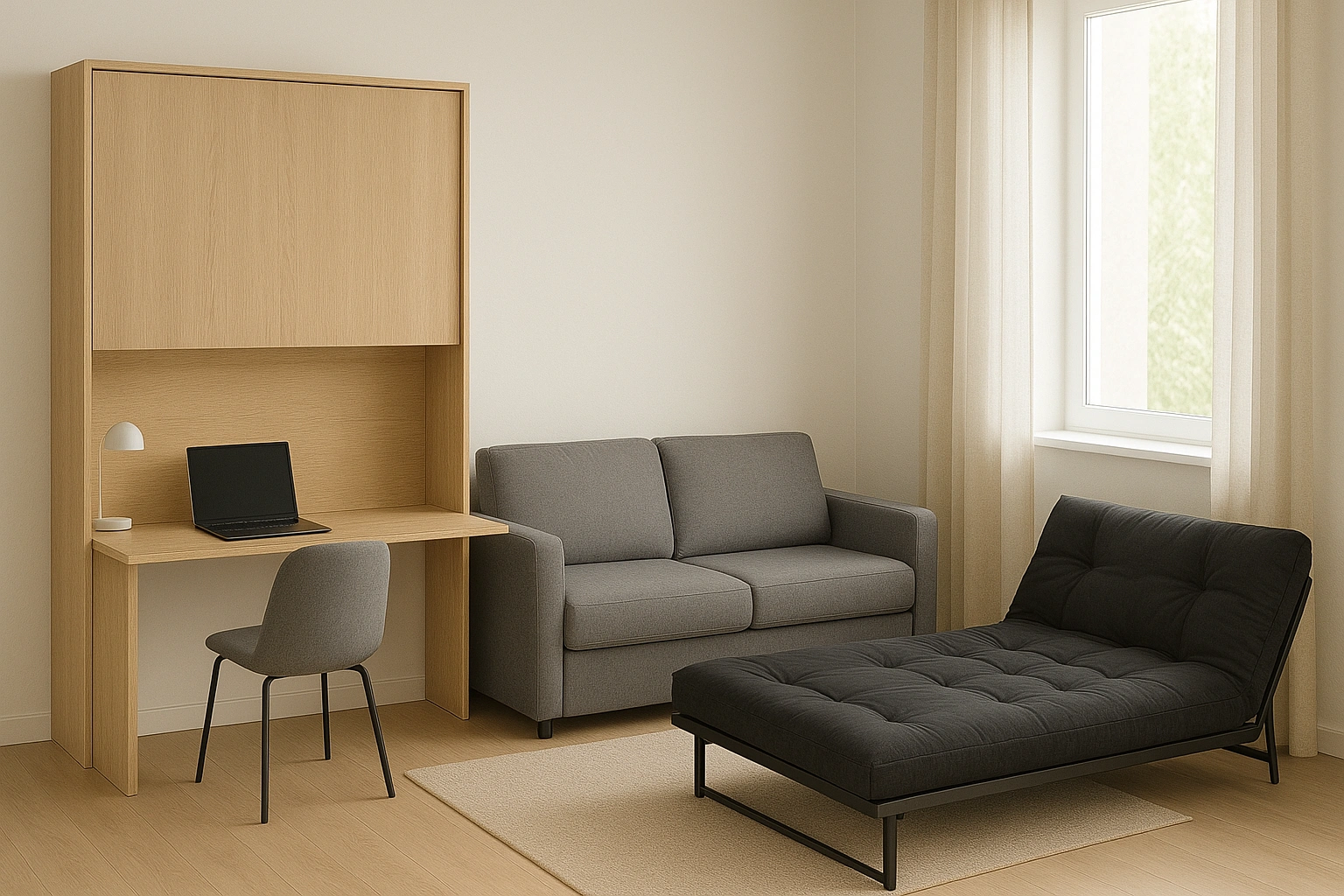
How does a Murphy Bed with Desk compare to other common space-saving sleep solutions?
| Solution | Space Efficiency | Sleep Comfort | Workspace | Best For |
|---|---|---|---|---|
| Murphy Bed w/ Desk | Excellent (Frees up entire floor) | Excellent (Real mattress) | Excellent (Dedicated desk) | True dual-function office/guest rooms. |
| Sofa Bed | Good (Sofa by day) | Fair (Thin, folding mattress) | None (Requires separate desk) | Living rooms that need occasional guest sleeping. |
| Futon | Good (Sofa by day) | Poor to Fair (Thin mattress) | None (Requires separate desk) | Budget-conscious, casual spaces. |
7 Common Mistakes to Avoid
Avoid these costly errors when choosing and installing your murphy bed:
- Miscalculating Space: Forgetting to measure the bed’s projection into the room when open.
- Ignoring Wall Structure: Failing to locate studs for secure anchoring is a major safety hazard.
- Buying the Wrong Mattress: A mattress that is too thick or too heavy can strain or break the lifting mechanism.
- Forgetting About Ceiling Height: Not accounting for ceiling fans or low ceilings with a vertical bed.
- Skimping on the Mechanism: A cheap, poorly made lift mechanism can be difficult to operate and unsafe.
- Overlooking Baseboards: Not accounting for the thickness of baseboards can prevent the unit from sitting flush against the wall.
- Ignoring Integrated Features: Passing up options like built-in lighting or USB ports that dramatically improve functionality.
Expert Tips for the Perfect Setup
“The key to a successful murphy bed installation is integration. Think about how it fits with the room’s overall design. Custom cabinetry can make it look like a seamless, intentional built-in.”
— David Chen, Architectural Designer
- Invest in Integrated Lighting: Built-in LED reading lights are a must-have feature for convenience.
- Opt for Cable Management: A desk with built-in grommets or channels will keep your workspace tidy.
- Choose a Quality Mattress: Don’t skimp here. A good memory foam or hybrid mattress (within the weight/height limits) will make all the difference.
- Consider Side Cabinets: Add matching side towers for storage, which can also serve as nightstands when the bed is down.
Frequently Asked Questions (FAQ) about Murphy Bed with Desk
Can you leave items on the desk when you lower the bed?
Yes, many modern Murphy Bed with Desk designs feature a pivoting or parallel-linkage mechanism that keeps the desk surface level as the bed is lowered.
Is a Murphy Bed with Desk comfortable for everyday use?
Absolutely. Unlike sofa beds, a murphy bed uses a standard mattress (up to a certain thickness), so its comfort level is identical to a traditional bed. The key is to choose a quality mattress that fits the manufacturer’s specifications.
Are murphy beds difficult to install?
Installation can be complex as it requires securely anchoring the unit to the wall studs. While many people with DIY experience can handle it, professional installation is often recommended to ensure safety and proper operation.
How much space do you need for a Murphy Bed with Desk?
You need to account for the cabinet’s dimensions when closed and the bed’s full projection into the room when open. A queen-size murphy bed typically requires about 85-90 inches of projection from the wall.
Can a murphy bed damage my wall or floor?
When installed correctly, a murphy bed should not damage your wall. The unit is anchored to wall studs for stability. Most designs do not attach to the floor, preventing any damage there.