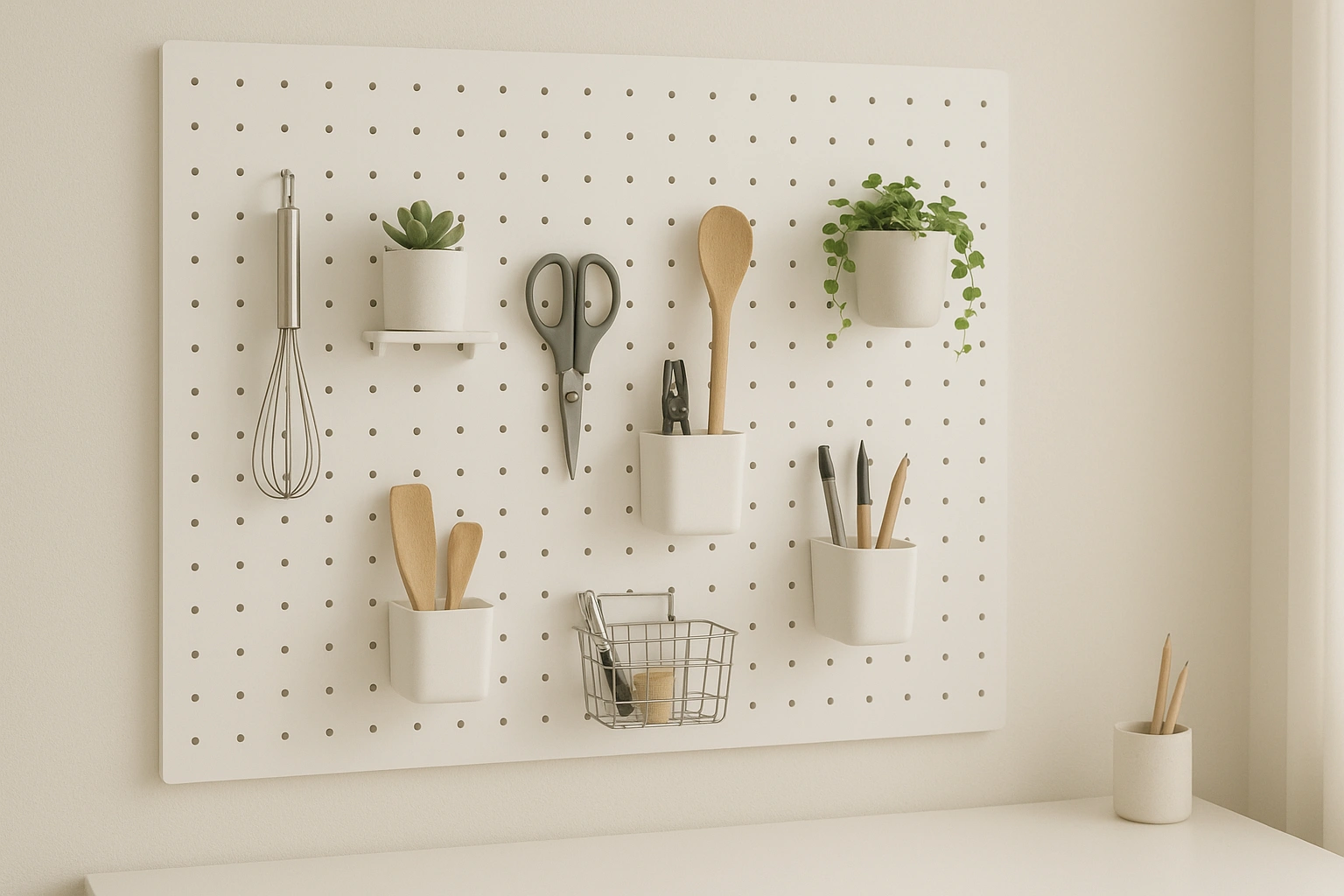
Open any drawer in your kitchen, office, or garage. What do you see? A tangled mess of utensils, a chaotic jumble of tools, a graveyard of pens and mystery cables? We buy organizers for our organizers, yet the clutter always seems to win, taking over our precious drawer and counter space. This is where Pegboard Wall Systems step in, offering an easy way to move items out of drawers and into clear, functional order.
But what if you could create a storage setup that is infinitely adaptable, keeps everything visible and within arm’s reach, and doubles as a stylish feature wall? With Pegboard Wall Systems, that idea becomes reality. It’s no longer just about utility in the garage—it has transformed into a chic, modern solution for kitchens, offices, and even living rooms.
This guide is your complete blueprint for mastering the art of the pegboard. By using versatile Pegboard Wall Systems, you’ll learn why this modular approach is the ultimate organizational tool, how to choose the right materials, and how to style it to create a space that feels both hyper-functional and highly personal. The best part is that these systems grow with you, adapting to your changing needs effortlessly.
What is a Pegboard Wall Storage System?
A pegboard wall storage system is a type of modular wall organizer consisting of a perforated hardboard (the pegboard) mounted on a wall. Many people now turn to Pegboard Wall Systems because the grid of holes allows for the insertion of hooks, shelves, bins, and other accessories. This creates a customizable layout that can be rearranged anytime, making Pegboard Wall Systems ideal for spaces that constantly evolve with your needs. With their flexibility, Pegboard Wall Systems have become an easy solution for anyone who values both function and style.
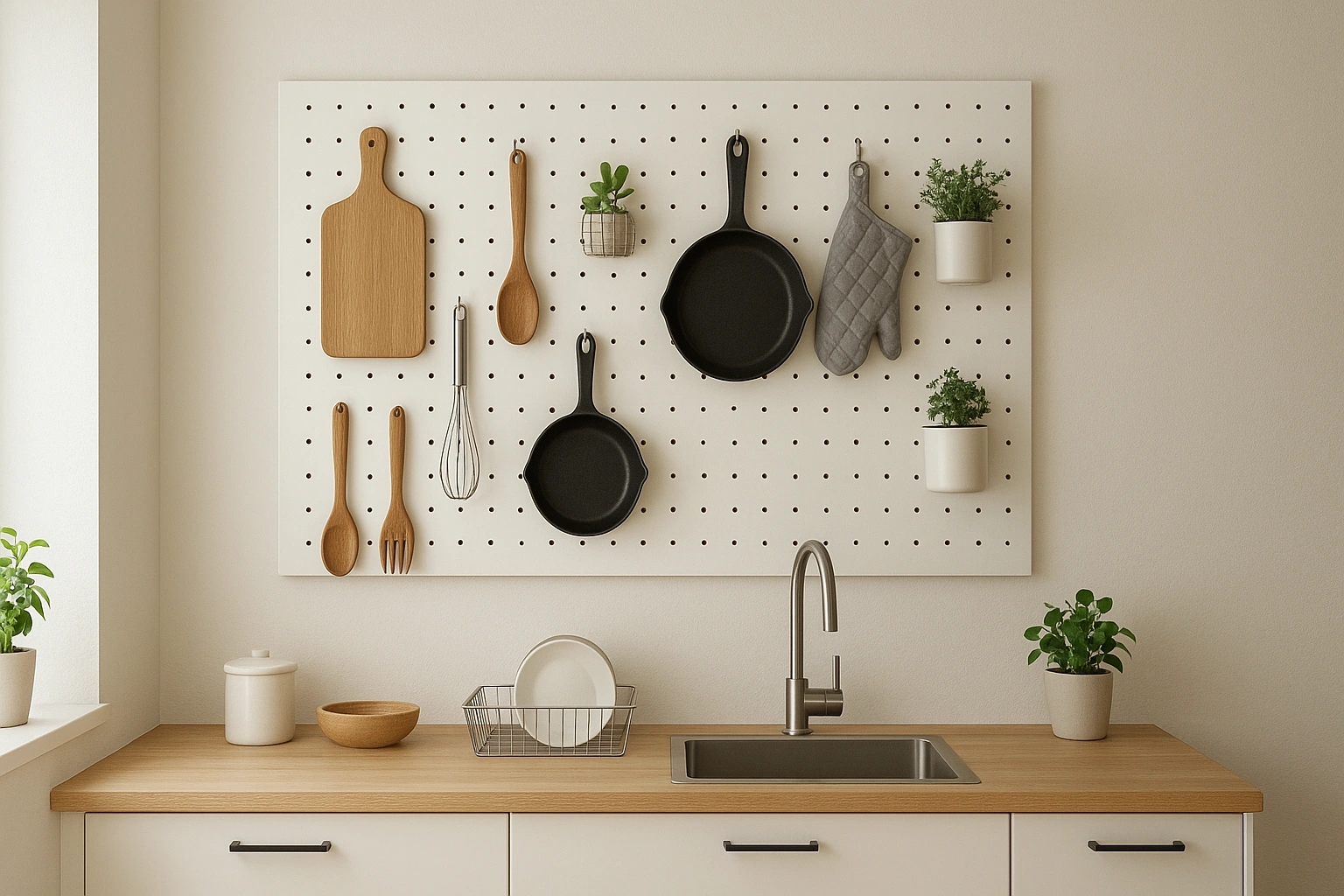
Once relegated to workshops, the pegboard has been reimagined by designers and homeowners in 2025. Modern Pegboard Wall Systems are now part of home organization trends, reflecting a shift toward flexible, personalized solutions over fixed, built-in storage. From stylish kitchen pegboard ideas displaying copper pans to clever garage setups, Pegboard Wall Systems prove to be a versatile canvas for organization in every corner of the modern home. Thanks to their adaptability, Pegboard Wall Systems fit seamlessly into kitchens, offices, craft rooms, and beyond.
The Ultimate Power of Pegboard Wall Systems: Why It’s a Must-Have
This simple system offers a unique combination of flexibility, efficiency, and style.
It Offers Ultimate Customization and Flexibility
A pegboard is not a static storage unit; it’s a dynamic system that evolves with you. This adaptability is its greatest strength:
- Reconfigure in Seconds: Simply move the hooks and shelves around to create a new layout. No tools required.
- A Place for Everything: With a vast ecosystem of accessories, you can find a specific holder for almost any item, from screwdrivers to rolls of wrapping paper.
- Grows with Your Needs: As your collection of tools or craft supplies grows, you can simply add more accessories or expand the board itself.
It Saves Precious Counter and Drawer Space
By moving items from horizontal surfaces to vertical ones, a pegboard is a small-space superhero. It frees up your valuable real estate by:
- Clearing Kitchen Counters: Hang your most-used utensils, knives, and cutting boards for easy access without cluttering the countertop.
- Emptying the “Junk Drawer”: Create a home office command center for pens, scissors, tape, and chargers.
- Organizing the Garage: Get tools off the workbench and onto the wall, giving you more space for projects.
It Makes Everything Visible and Accessible
The old adage “out of sight, out of mind” is the enemy of organization. Pegboard Wall Systems flip that idea on its head by keeping your most important items visible and within easy reach.
With Pegboard Wall Systems, this “grab-and-go” efficiency becomes second nature. It saves you time and frustration, whether you’re searching for the right spice in the kitchen or the right screwdriver in the garage.
More than just storage, Pegboard Wall Systems create a sense of order that feels effortless. By turning your walls into smart organizers, they help you stay focused and avoid the chaos of misplaced essentials.
A well-organized space makes any activity more enjoyable, even just relaxing to watch a movie from a site like Kamar Film.
Anatomy of a Pegboard System: The Key Components
A pegboard is more than just the board; it’s an entire ecosystem of parts that work together.
- The Board:This is the foundation. It can be made from traditional MDF, heavy-duty metal, sleek plywood, or even clear acrylic. The hole diameter (usually 1/4″ for heavy duty or 1/8″ for light duty) is a critical factor.
- The Mounting Frame:A pegboard cannot be mounted flat against a wall. It needs a gap behind it for the hooks to fit. This is achieved with a simple wooden frame (furring strips) or specialized spacers.
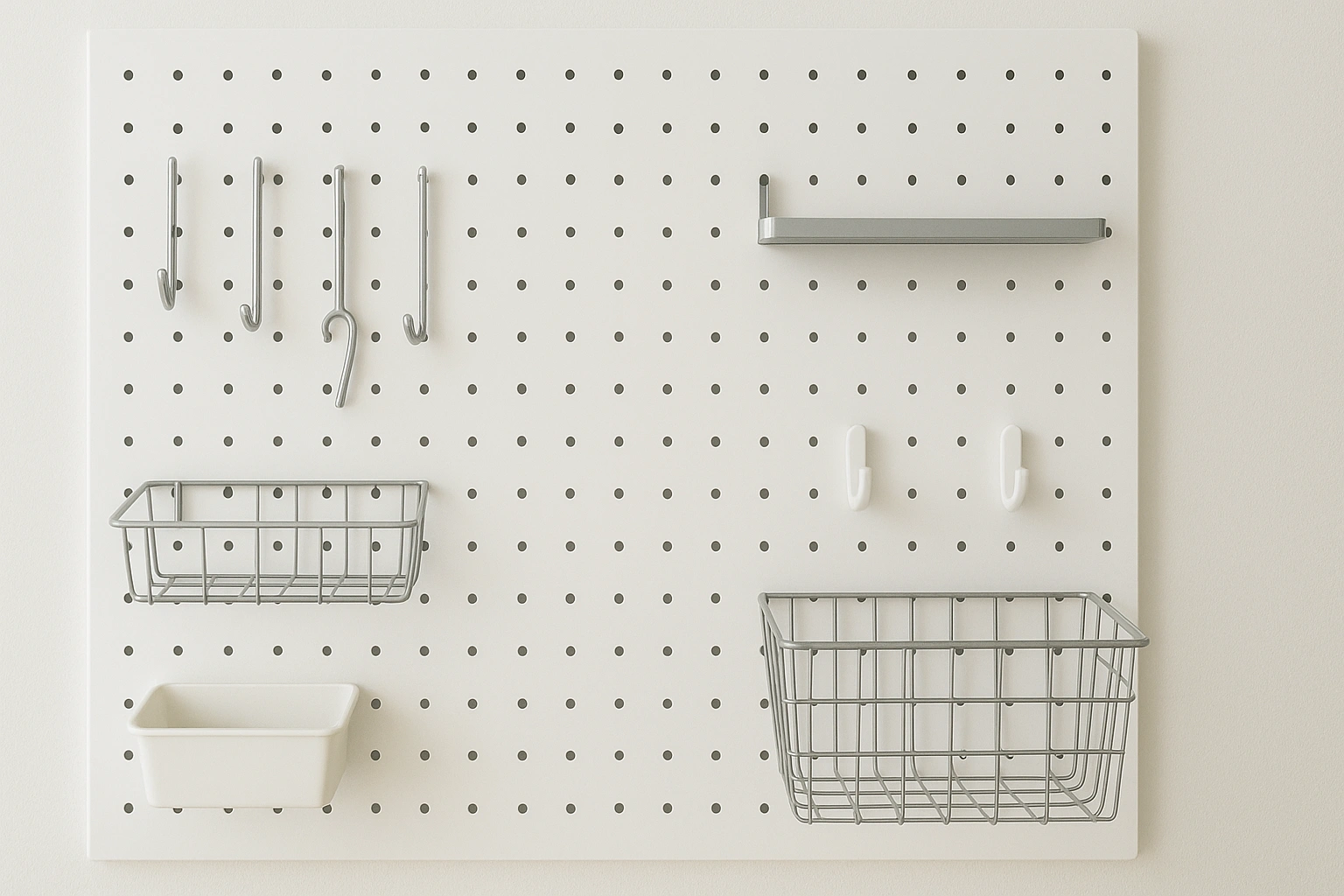
- The Accessories:This is where the magic happens. The vast array of accessories includes J-hooks, L-hooks, shelves, bins, baskets, paper towel holders, magnetic strips, and specialized tool holders.
Real-Life Test: A Craft Corner Transformation
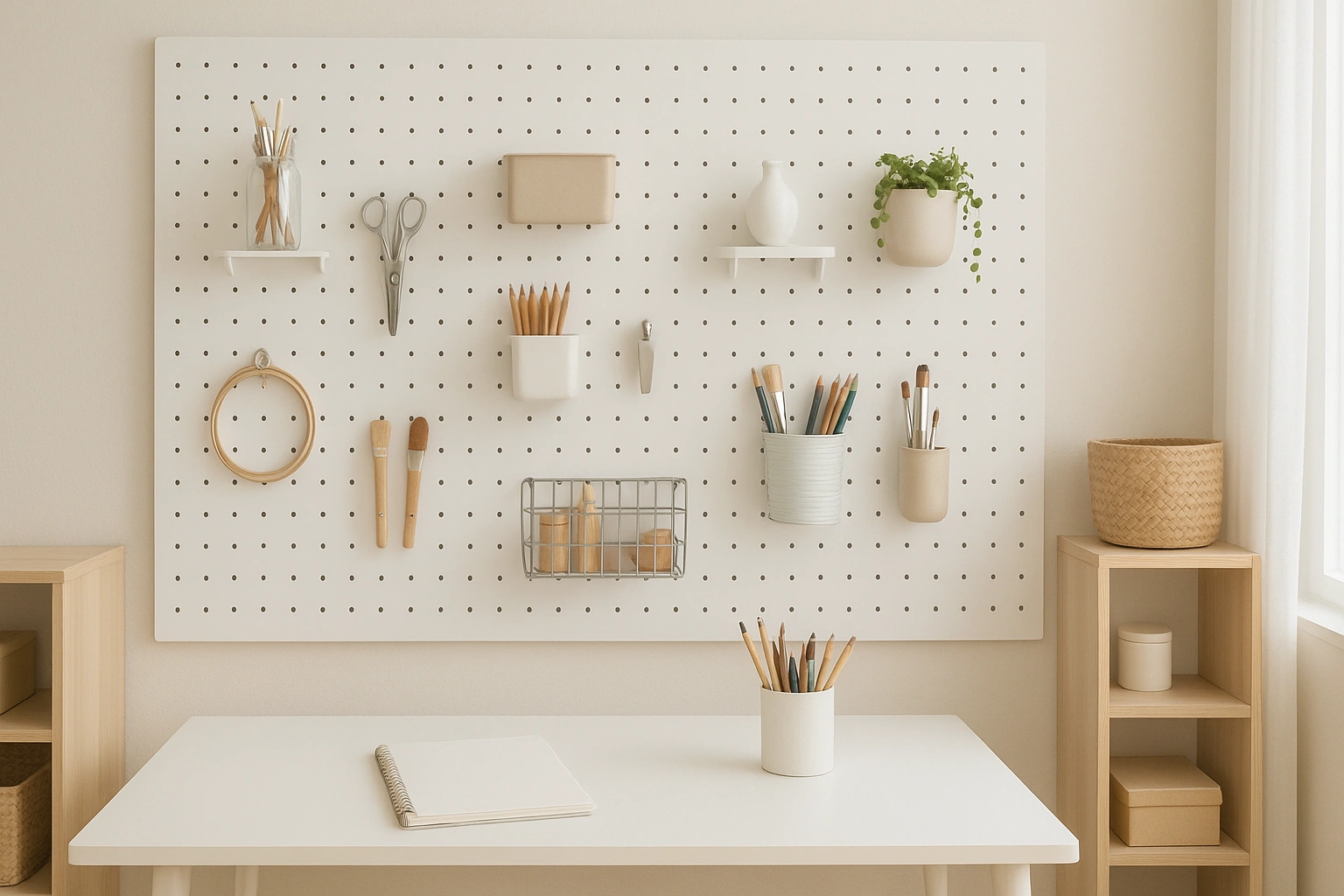
My craft supplies were a chaotic explosion in a set of plastic drawers. I installed a 4×4 foot plywood pegboard above my craft table, painting it a soft sage green to match the room’s decor.
The process of organizing was incredibly satisfying, especially once I incorporated Pegboard Wall Systems into my craft corner. I used long hooks for my rolls of vinyl and wrapping paper, small bins for markers and paintbrushes, and a series of shelves for my jars of buttons and beads.
With Pegboard Wall Systems, even my magnetic bar for scissors and cutting tools found the perfect spot. Now, instead of digging through cluttered drawers, I can see all my supplies at a glance and enjoy the clean, open layout.
What surprised me most is how Pegboard Wall Systems not only solved the mess but also added a design element. The setup didn’t just organize my craft corner; it transformed it into an inspiring, creative feature wall that feels stylish and functional at the same time.
| Pros | Cons |
|---|---|
| Infinitely customizable and easy to rearrange | Installation requires tools and careful planning |
| Keeps everything visible and easily accessible | Can look cluttered if not styled intentionally |
| Frees up valuable counter and drawer space | Standard hooks can sometimes fall out (but can be secured) |
Material Showdown: Which Pegboard is Right for You?
The board’s material affects its strength, style, and cost.
| Material | Strength | Pros | Cons | Best For |
|---|---|---|---|---|
| Metal | Very High | Extremely durable, magnetic, modern/industrial look | Most expensive, can be heavy | Garages, workshops, and kitchens for hanging pots. |
| Plywood | High | Strong, warm/natural look, can be stained or painted | Heavier than MDF, can splinter if not finished | Living rooms, offices, and craft rooms for a stylish look. |
| MDF (Hardboard) | Medium | Most affordable, lightweight, easy to paint | Least durable, can sag under heavy weight | Light-duty crafts, gift wrap stations, kids’ rooms. |
| Plastic | Medium | Waterproof, easy to clean, comes in many colors | Can look less premium, may warp in heat | Bathrooms, laundry rooms, and kids’ play areas. |
7 Common Pegboard Mistakes to Avoid
Get your installation right the first time by avoiding these common errors:
- Mounting it Flat Against the Wall: Pegboard hooks need space behind the board to anchor correctly. You must use a framing system or spacers.
- Not Anchoring to Studs: For any system that will hold significant weight, you must screw the frame into the wall studs. Drywall anchors alone are not enough.
- Using the Wrong Hooks: Make sure your hooks match your board’s hole diameter (1/4″ or 1/8″). Using the wrong size will result in wobbly, insecure hooks.
- Not Securing Your Hooks: Standard hooks can fall out when you grab an item. Use hook locks, zip ties, or a dab of hot glue to keep them in place.
- Creating a Cluttered Layout: Just because you can hang something doesn’t mean you should. A good pegboard layout has breathing room and visual balance.
- Forgetting to Trace Your Tools: For a workshop or garage pegboard, tracing the outline of your tools with a marker makes it immediately obvious where everything goes.
- Choosing a Board That’s Too Small: It’s better to have a slightly larger pegboard with some empty space than one that is crammed to capacity from day one.
Expert Tips for a Picture-Perfect Pegboard
“Don’t be afraid to treat your pegboard like a piece of art. Paint it a bold accent color. Create zones for different tasks—a coffee station zone on your kitchen pegboard, a cutting zone on your craft board. It’s a functional gallery wall.”
— Jenna Davis, Professional Organizer
- Plan Your Layout First: Lay your pegboard on the floor and arrange all your items on it before you hang it on the wall.
- Think in Groups: Store similar items together (e.g., all baking utensils in one area, all screwdrivers in another).
- Vary the Accessories: Use a mix of hooks, shelves, and bins to create visual interest and accommodate different types of items.
- Incorporate Greenery: Add a small shelf with a trailing plant to bring life and softness to your board.
- Light It Up: Install a simple LED light strip along the top or side of your pegboard to illuminate your display and make it a true feature.
Frequently Asked Questions (FAQ)
How much weight can a pegboard hold?
The weight capacity depends on the material of the board and how it’s installed. A standard MDF pegboard can typically hold 15-20 pounds per hook if anchored to drywall, but up to 100 pounds for the whole board if mounted to studs. Metal pegboards are much stronger and can often hold 50+ pounds per hook.
Do I need to build a frame to mount a pegboard?
Yes, you need to create a small gap (usually about 1/2 to 1 inch) between the pegboard and the wall for the hooks to have space to be inserted. This is typically done by mounting the pegboard to a simple wooden frame (furring strips) that is then anchored to the wall studs.
What’s the difference between 1/4-inch and 1/8-inch pegboard systems?
This refers to the diameter of the holes. 1/4-inch systems are the heavy-duty standard, with thicker boards and stronger hooks designed for tools and heavier items. 1/8-inch systems are lighter-duty and better suited for crafts, jewelry, and small decorative items.
How do I keep pegboard hooks from falling out?
This is a common issue. You can use zip ties, hot glue, or specialized plastic/metal hook locks and clips that are designed to secure the hooks firmly to the board, preventing them from coming loose when you grab a tool.
Can I paint a pegboard?
Absolutely! Painting a pegboard is a fantastic way to customize it to match your decor. It’s best to prime it first and then use a spray paint or a small roller to apply thin, even coats to avoid clogging the holes.