
Think about your standard light switch. It’s a blunt instrument in a world of precision—offering only two options: 100% blinding brightness or 100% darkness. Unlike a Smart Dimmer Switch, this old setup leaves no room for flexibility. With a Smart Dimmer Switch in place, you get seamless transitions of light, making every corner of your home feel more refined. The difference between a basic switch and a Smart Dimmer Switch is the balance of comfort, mood, and efficiency.
What if you could effortlessly dial in the perfect level of light for any activity—a soft glow for dinner, a bright light for working, or a dim ambiance for movie night—all while saving money? A Smart Dimmer Switch for home use makes this possible with a single touch or voice command. By setting custom levels, your Smart Dimmer Switch ensures the right brightness every time. This simple Smart Dimmer Switch upgrade also helps reduce energy waste while improving your daily experience.
This guide will illuminate every aspect of smart dimmers. From installation tips to advanced features, a Smart Dimmer Switch stands out as a practical investment. You’ll learn how the Smart Dimmer Switch works, the real benefits it brings, and why choosing the right model matters. With a Smart Dimmer Switch, you’re not just modernizing your lights—you’re adding intelligent, eco smart lighting that adapts perfectly to your lifestyle.
What Exactly Is a Smart Dimmer Switch?
A smart dimmer switch is a direct replacement for your standard wall switch. It combines the physical functionality of a traditional dimmer (allowing you to manually adjust brightness) with smart technology. By connecting to your home’s Wi-Fi or a smart home hub, it allows you to control your existing, hardwired light fixtures via a smartphone app, voice commands (with Alexa, Google Assistant, or Siri), and automated schedules.
The rise of the **smart wall switch** is a cornerstone of the modern connected home. As documented by tech publications like Wired, homeowners are moving beyond novelty gadgets to integrated systems that offer real utility. A smart dimmer is a foundational upgrade because it makes your home’s core infrastructure—its lighting—more intelligent and responsive to your lifestyle.
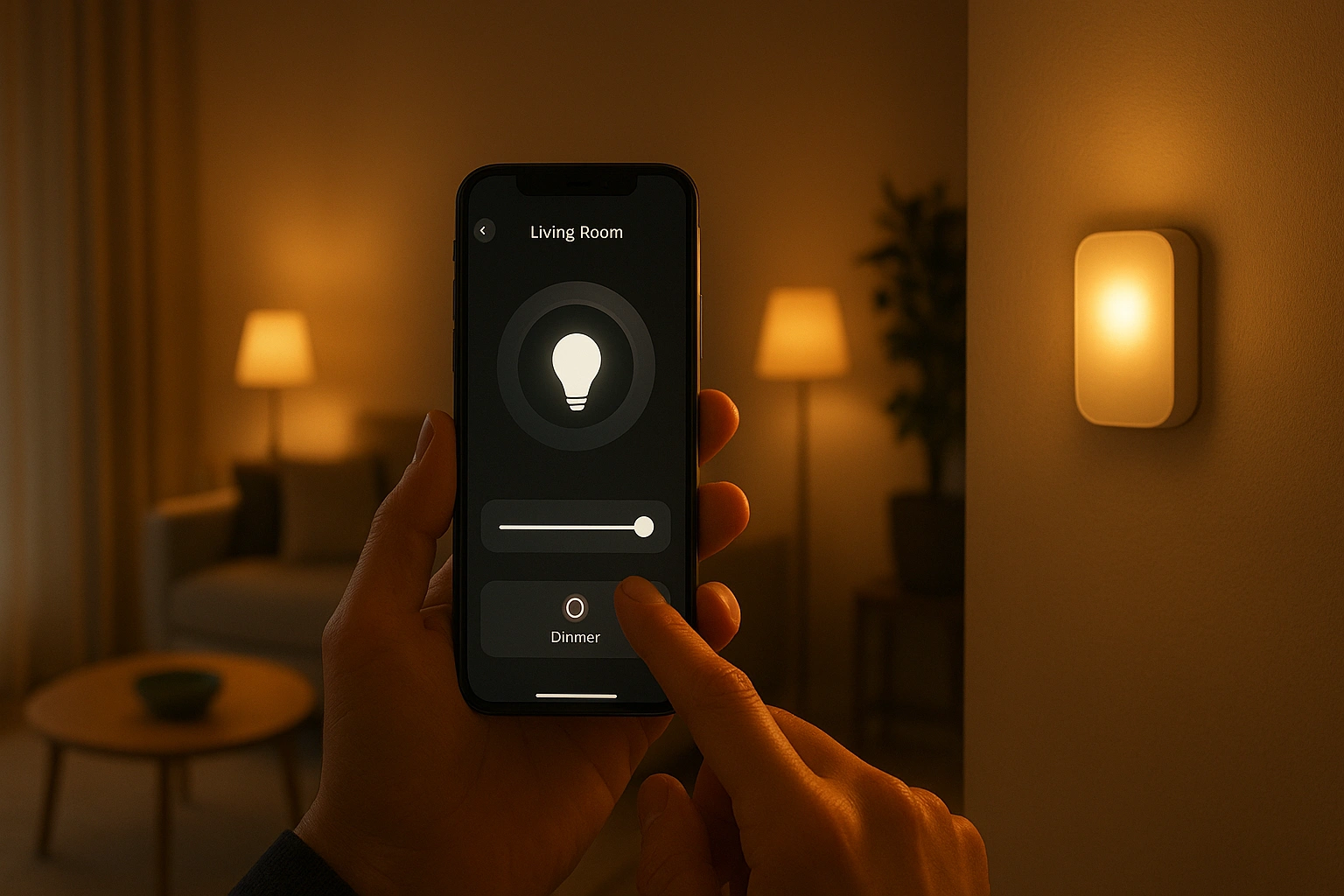
Why a Smart Dimmer is a Brilliant Upgrade
This simple device offers a powerful combination of ambiance, efficiency, and intelligence.
Master Your Home’s Ambiance
This is the most immediate benefit. A smart dimmer gives you granular control over your lighting, allowing you to craft the perfect atmosphere for any situation:
- Movie Night: Dim the lights down to 10% with a single voice command.
- Dinner Parties: Set a warm, inviting glow at 40% brightness.
- Focus Mode: Set lights to a bright, cool 80% for working or studying.
- Gentle Wake-Up: Create a schedule that slowly fades the lights on in the morning, mimicking a natural sunrise.
Unlock Significant Energy Savings
Dimming your lights doesn’t just change the mood; it directly reduces energy consumption. According to energy experts, dimming a light bulb by 25% can save you about 20% in electricity costs over the bulb’s lifetime. A smart dimmer automates these savings:
- Set a maximum brightness level (e.g., 80%) for rooms that don’t need full power.
- Schedule lights to dim automatically during evening hours.
- Ensure lights are never left on at 100% brightness by mistake.
Extend the Lifespan of Your Bulbs
Running a light bulb at a lower intensity reduces the heat and stress on its components. By consistently dimming your lights, even by a small amount, you can dramatically extend their lifespan. A bulb that might last 15,000 hours at full brightness could last 25,000 hours or more when regularly dimmed, saving you money on replacements. This is especially true for making sure your switch is **LED dimmer compatible**.
How It Works: The Nuts and Bolts of Smart Dimmers
Understanding a few key technical aspects will help you choose the right switch and ensure a smooth installation.
- The All-Important Neutral Wire:Most smart switches need a neutral wire to draw a small amount of power continuously, keeping their “smart” radio active. Homes built before the 1980s may not have neutral wires in the switch boxes. It’s crucial to check your wiring before you buy. If you don’t have one, you’ll need to look for specific “no-neutral-required” models or consult an electrician.
- Dimming Technology and Bulb Compatibility:Not all dimmers work with all bulbs. Modern smart dimmers are designed for LEDs, but you must use *dimmable* LED bulbs. Using a dimmer with a non-dimmable bulb will result in flickering, buzzing, or failure. Look for switches that are explicitly **LED dimmer compatible** and offer advanced features like adjustable dimming range to prevent low-level flicker.
- Single-Pole vs. 3-Way Switches:A single-pole switch controls a light from one location. A 3-way switch controls a light from two locations (e.g., top and bottom of stairs). You need to buy the correct type of smart switch for your wiring setup.
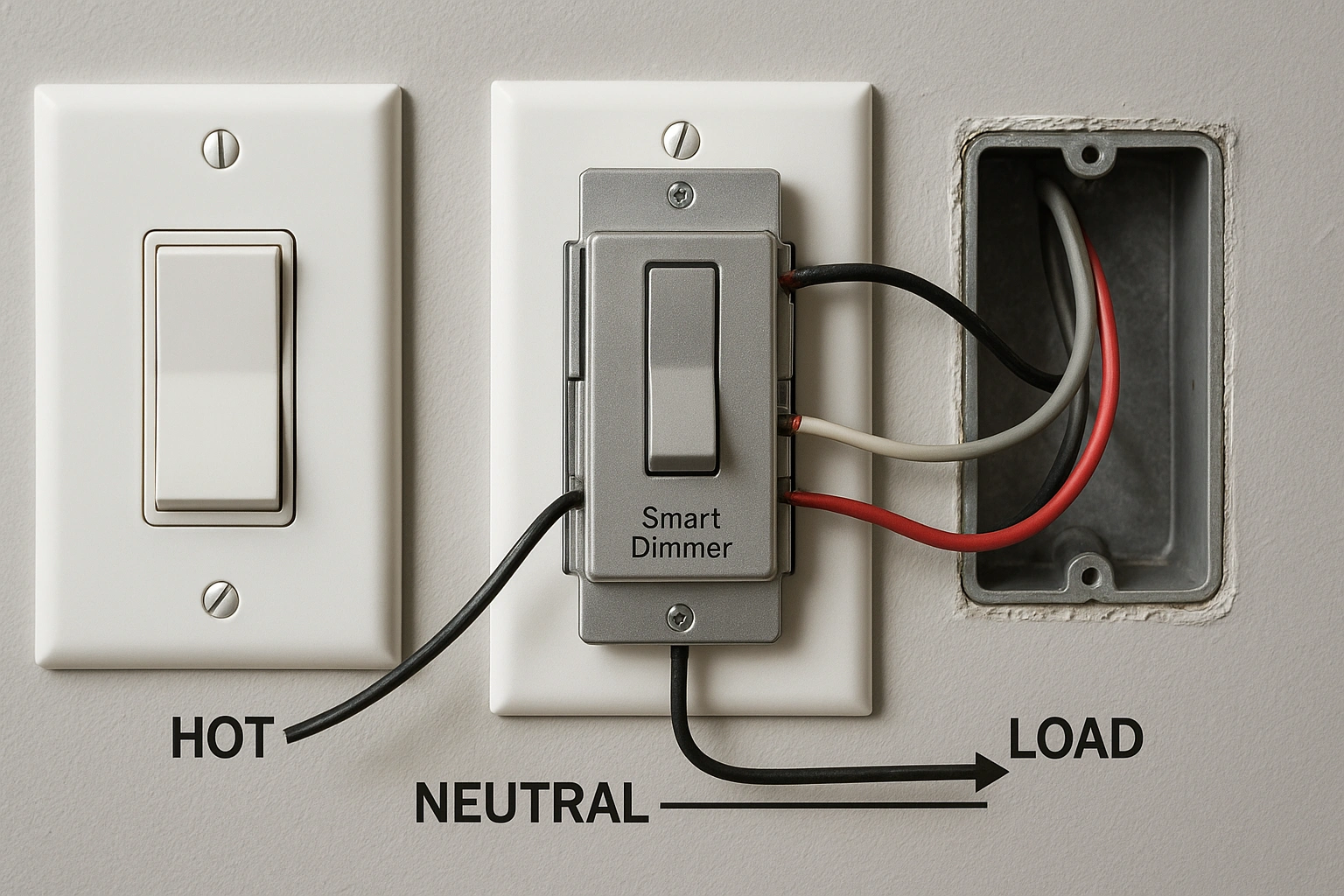
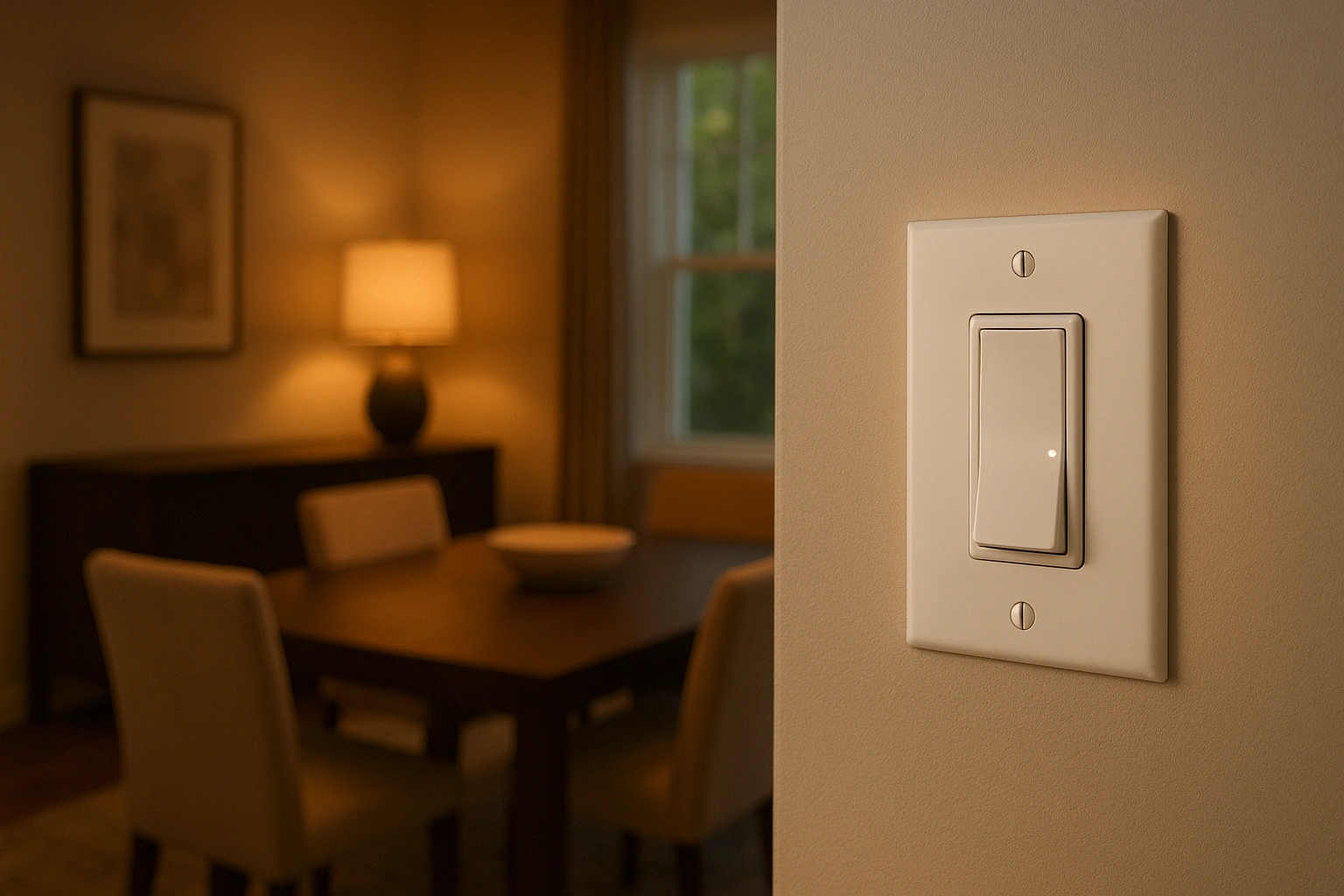
Real-Life Test: Upgrading My Dining Room Lighting
My dining room was a prime candidate for a smart dimmer. The overhead chandelier was always too harsh for meals. I chose a Wi-Fi-enabled smart dimmer switch and, after confirming I had a neutral wire, installed it myself in about 20 minutes.
The difference was night and day. I immediately created a “Dinner” scene in the app that set the chandelier to a warm 35% brightness. For game nights, a “Bright” scene at 75% was perfect. The best feature was scheduling a “Good Night” routine that automatically faded all the main floor lights to off at 11 PM. It was a simple change that made the room feel more luxurious and functional, and it was far more intuitive for guests to use the physical switch than to figure out a smart bulb app. This simple upgrade made the room perfect for everything from dining to watching content from Kamar Film.
| Pros | Cons |
|---|---|
| Intuitive for everyone; works like a normal switch | Installation is more involved than screwing in a bulb |
| Cost-effective for multi-bulb fixtures | Requires checking for a neutral wire |
| Adds permanent value and functionality to the home | Doesn’t allow for color control (only brightness) |
Smart Dimmer Switch vs. Smart Bulb vs. Traditional Dimmer
Where does a smart dimmer fit in the lighting landscape?
| Product | Control Method | Pros | Cons | Best For |
|---|---|---|---|---|
| Smart Dimmer Switch | Wall, App, Voice | Intuitive, controls multiple bulbs, adds home value | Requires installation, no color control | Main room lighting (kitchens, living rooms). |
| Smart Bulb | App, Voice (wall switch must stay on) | Easy setup, offers color options | Confusing for guests, expensive for many bulbs | Single lamps, accent lighting, renters. |
| Traditional Dimmer | Wall only | Simple, reliable, affordable | No smart control, no automation | Users who don’t want or need smart features. |
7 Common Mistakes to Avoid with Smart Dimmers
Steer clear of these pitfalls for a successful installation:
- Not Checking for a Neutral Wire: This is the #1 installation mistake. Open your switch box and look for a bundle of white wires tucked in the back before you buy.
- Using Non-Dimmable Bulbs: This will cause flickering and can ruin both the switch and the bulbs. Check your bulbs!
- Ignoring the Load Capacity: Every dimmer has a maximum wattage it can handle. Overloading it by connecting too many bulbs is a fire hazard.
- Buying a Single-Pole for a 3-Way Setup: They are not interchangeable. You’ll need a specific 3-way kit.
- Choosing the Wrong Dimmer for Your Lights: Ensure the switch is compatible with your lighting type (LED, Incandescent, Halogen). Most modern ones are, but it’s good to check.
- Forgetting About Switch Box Size: Smart switches are bulkier than standard switches. A crowded or shallow electrical box might not have enough room.
- Skimping on a Reputable Brand: A cheap, uncertified switch can be unreliable and a safety risk. Stick with well-known brands that have good reviews and safety certifications (like UL or ETL).
Expert Tips for Mastering Your Smart Lighting
“A smart dimmer is the brain of a room’s lighting. Don’t just program on/off times. Create scenes that transition. For example, a ‘Fade to Evening’ scene that slowly dims the lights over 30 minutes as the sun sets. That’s true automation.”
— David Chen, Smart Home Integrator
- Calibrate Your Dimming Range: Most smart dimmer apps let you set the minimum and maximum brightness levels. This helps prevent flickering that can occur with some LED bulbs at very low levels.
- Use “Smart Away” Mode: When on vacation, this feature will turn your lights on and off at random intervals to simulate occupancy and deter intruders.
- Link with Motion Sensors: For ultimate efficiency, pair your smart dimmer with a smart motion sensor. The lights can turn on to 50% when you enter and turn off when you leave.
- Double-Tap for Scenes: Many smart dimmers have advanced features like a double-tap or triple-tap that can be programmed to trigger a favorite scene (like “Movie Time”) instantly from the switch itself.
Frequently Asked Questions (FAQ)
Do I need a neutral wire to install a smart dimmer switch?
Most smart dimmer switches require a neutral wire to maintain a constant power connection for their ‘smart’ components. While some ‘no-neutral-required’ models exist, they are less common and may have compatibility issues. It’s crucial to check the wiring in your switch box before purchasing.
Can I use a smart dimmer switch with any light bulb?
No. You must use dimmable bulbs. Using a dimmer switch with non-dimmable bulbs, especially LEDs, can cause flickering, buzzing, and can damage both the bulb and the switch. Always look for bulbs marked as ‘dimmable’.
What is a 3-way smart dimmer switch?
A 3-way switch setup allows you to control a single light fixture from two different locations, such as at the top and bottom of a staircase. A 3-way smart dimmer switch is designed to work in this configuration, often paired with a standard or satellite switch at the other location.
Will my smart dimmer work if the Wi-Fi is down?
Yes. A smart dimmer switch will always function as a normal physical switch, allowing you to turn on, off, and dim the lights manually from the wall, even with no internet connection. You will only lose app and voice control capabilities.
Is a smart dimmer switch better than a smart bulb?
It depends on the situation. A smart dimmer is often better for rooms with multiple bulbs controlled by one switch (like kitchens or living rooms) as it’s more cost-effective and intuitive for guests. Smart bulbs are better for single lamps or when you want to control colors.