
How many times have you walked through your home, switching off lights in empty rooms? The hallway, the kids’ bathroom, the closet—these silent energy vampires are constantly draining power and inflating your electricity bill, one forgotten flick of a switch at a time. With motion sensor lights, those small mistakes stop costing you money.
This comprehensive guide will show you how these intelligent lights work, the incredible benefits they offer, and how to choose the perfect setup to start saving money and making your home safer and more convenient. Whether you call it motion-sensor lighting or simply smart motion lights, the result is the same: comfort, savings, and peace of mind.
What Are Motion Sensor Smart Lights?
At their simplest, motion sensor lights are fixtures that automatically turn on when they detect movement and switch off after a set period of inactivity.
Modern motion sensor lights take this further with a “smart” component that elevates the concept beyond basic automation.
These smart motion sensor lights aren’t just standalone gadgets but part of an integrated smart home lighting system.
They can connect with other devices, and motion sensor lights can even be controlled via smartphone apps with advanced customization options.
In 2025, this technology is more relevant than ever. As homes become more connected, consumers expect automation that provides both convenience and efficiency. A recent report from Google’s own efficiency studies emphasizes how automation can drastically cut energy waste. Motion sensor lights are a prime example of this principle in action, representing the peak of **energy efficient lighting** by ensuring not a single watt is wasted on an empty room.
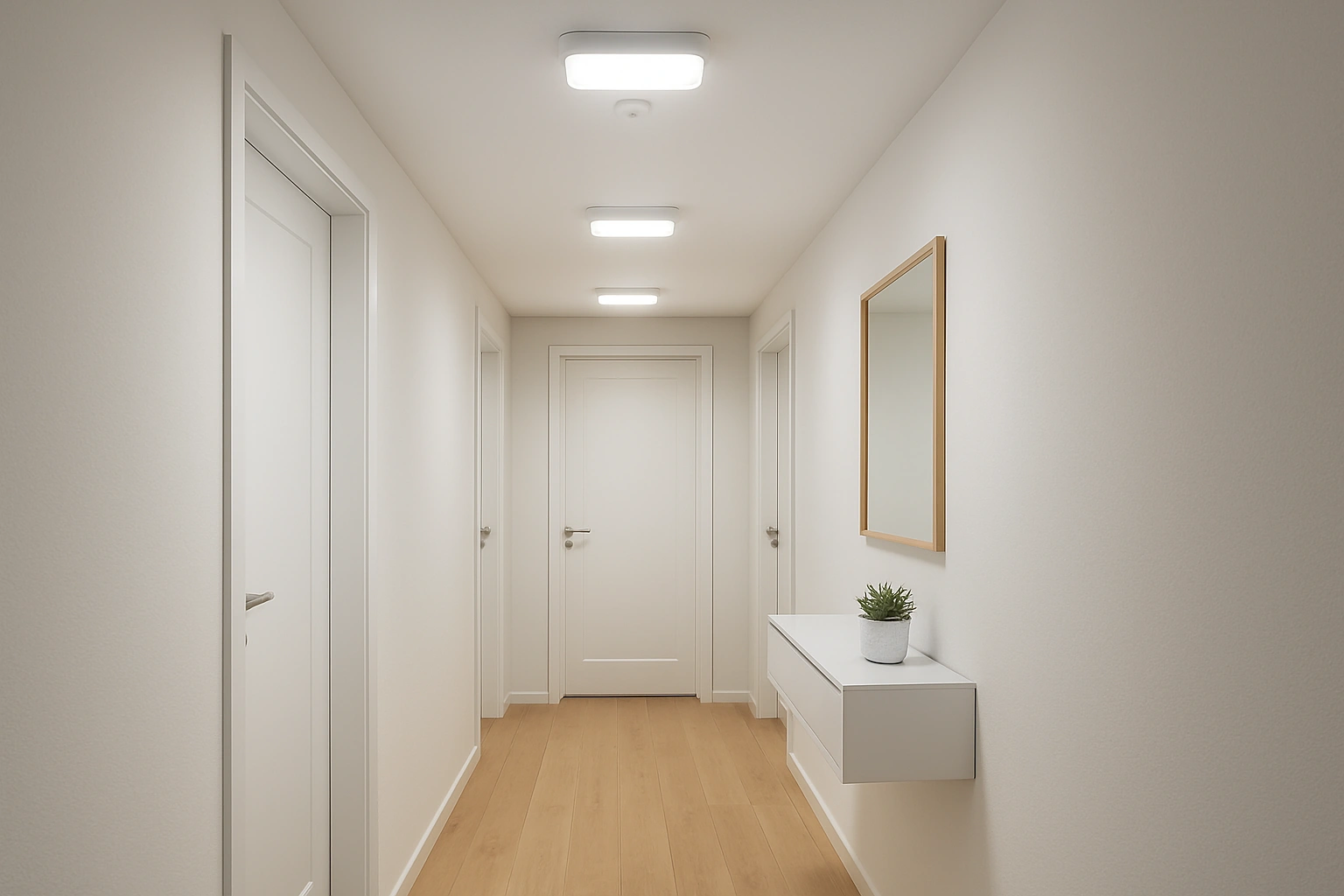
The Triple-Threat Benefits: Savings, Security, and Simplicity
The appeal of motion sensor lighting lies in its ability to deliver three major advantages simultaneously.
Unbeatable Energy and Cost Savings
This is the number one reason people make the switch. By automatically turning off lights, motion sensors eliminate human error and forgetfulness. The savings are most dramatic in areas where lights are needed frequently but for short periods:
- Hallways & Staircases: Lights only activate as you pass through.
- Closets & Pantries: Get instant light the moment you open the door, and never worry about closing it.
- Bathrooms & Laundry Rooms: Perfect for quick trips where you might forget to hit the switch on your way out.
A Powerful Boost to Home Security
Motion-activated lights are one of the most effective and affordable crime deterrents. An unexpected floodlight can startle a potential intruder, making them feel exposed and far more likely to flee. This is especially effective for:
- Front Porches & Driveways: Illuminate your path as you arrive home and alert you to unexpected visitors.
- Backyards & Side Alleys: Eliminate dark spots where intruders might hide.
- Indoors: When you’re away, an interior light suddenly turning on can make a would-be burglar think someone is home.
Effortless Convenience and Safety
The hands-free nature of motion sensor lights adds a touch of luxury and practicality to daily life. No more fumbling for a light switch in the dark with your hands full of groceries. It’s also a significant safety feature, reducing the risk of trips and falls by ensuring your path is always lit, which is invaluable for households with children or elderly family members. This convenience makes everyday tasks, even relaxing to watch a movie from Kamar Film, that much easier.
How They Work: Understanding the Technology
To choose the right product, it helps to know what’s going on behind the scenes.
- Types of Motion Sensors:
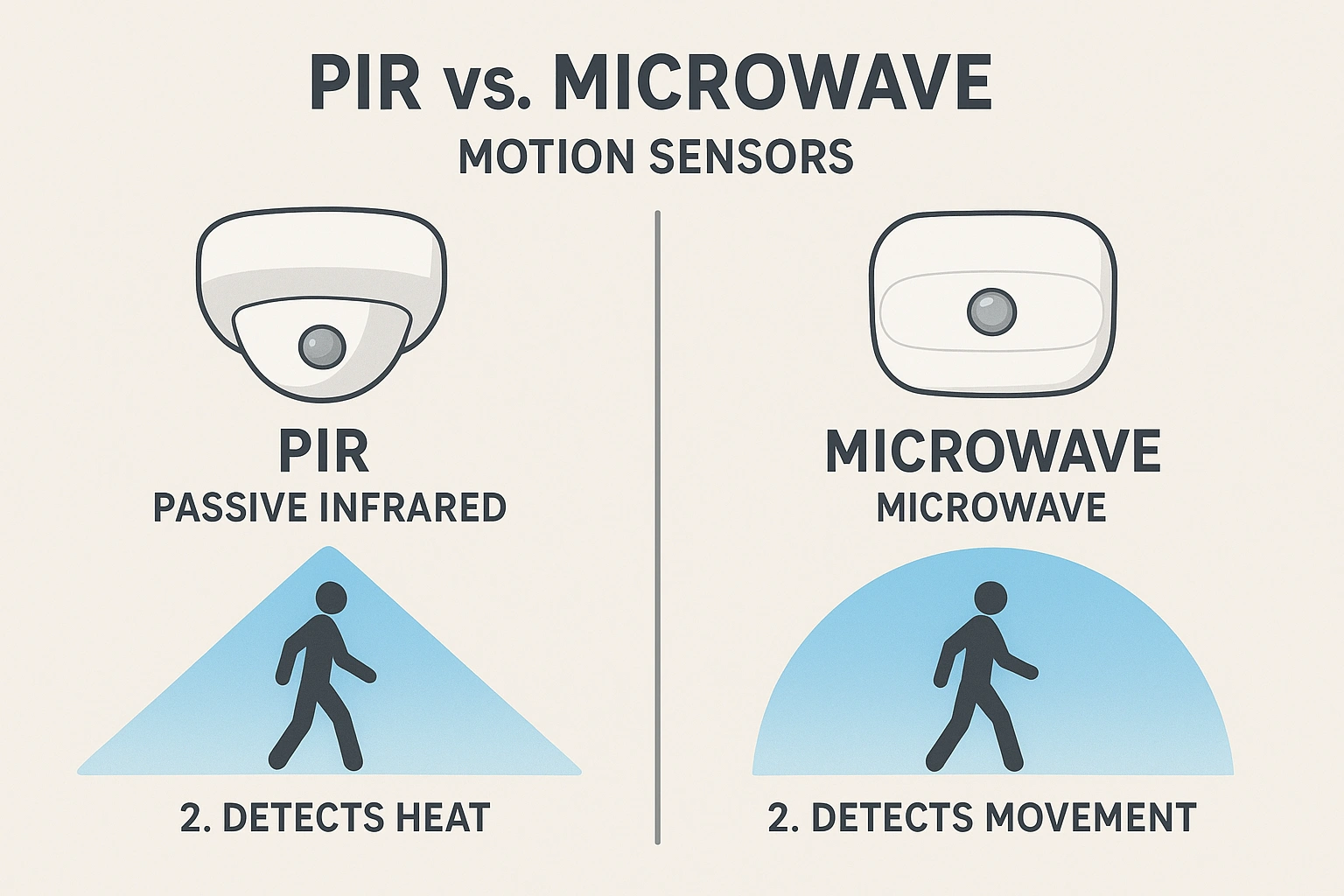
- Passive Infrared (PIR): The most common type. It detects the infrared energy (body heat) emitted by people and animals. It’s reliable and energy-efficient but requires a clear line of sight.
- Microwave (MW): Emits microwave pulses and measures the reflection off objects. It can cover larger areas and “see” through walls or around corners, but can sometimes be triggered by non-human movement (like blowing branches).
- Dual-Tech/Hybrid: Combines PIR and MW sensors. A light will only activate if both sensors are triggered, dramatically reducing false alarms. This is the gold standard for reliability.
- Key Adjustable Settings:
- Sensitivity: Controls how much movement is needed to trigger the sensor. You can often adjust this to prevent pets from setting it off.
- Time Delay: Determines how long the light stays on after motion is no longer detected (e.g., from 30 seconds to 15 minutes).
- Ambient Light Sensor (Photocell): A crucial feature that prevents the light from turning on during the day, saving even more energy.
Real-Life Test: Automating My Hallway and Pantry
I decided to tackle two of the biggest energy-wasting culprits in my home: the main hallway and the kitchen pantry. I used a hardwired smart motion sensor switch for the hallway’s recessed lights and a simple, battery-powered LED light strip for the pantry, both working just like motion sensor lights designed for everyday convenience.
The results were immediate and impressive. The pantry light flicking on the moment the door cracked open felt like magic, a reminder of how reliable motion sensor lighting can be. No more leaving the door ajar and the light on for hours.
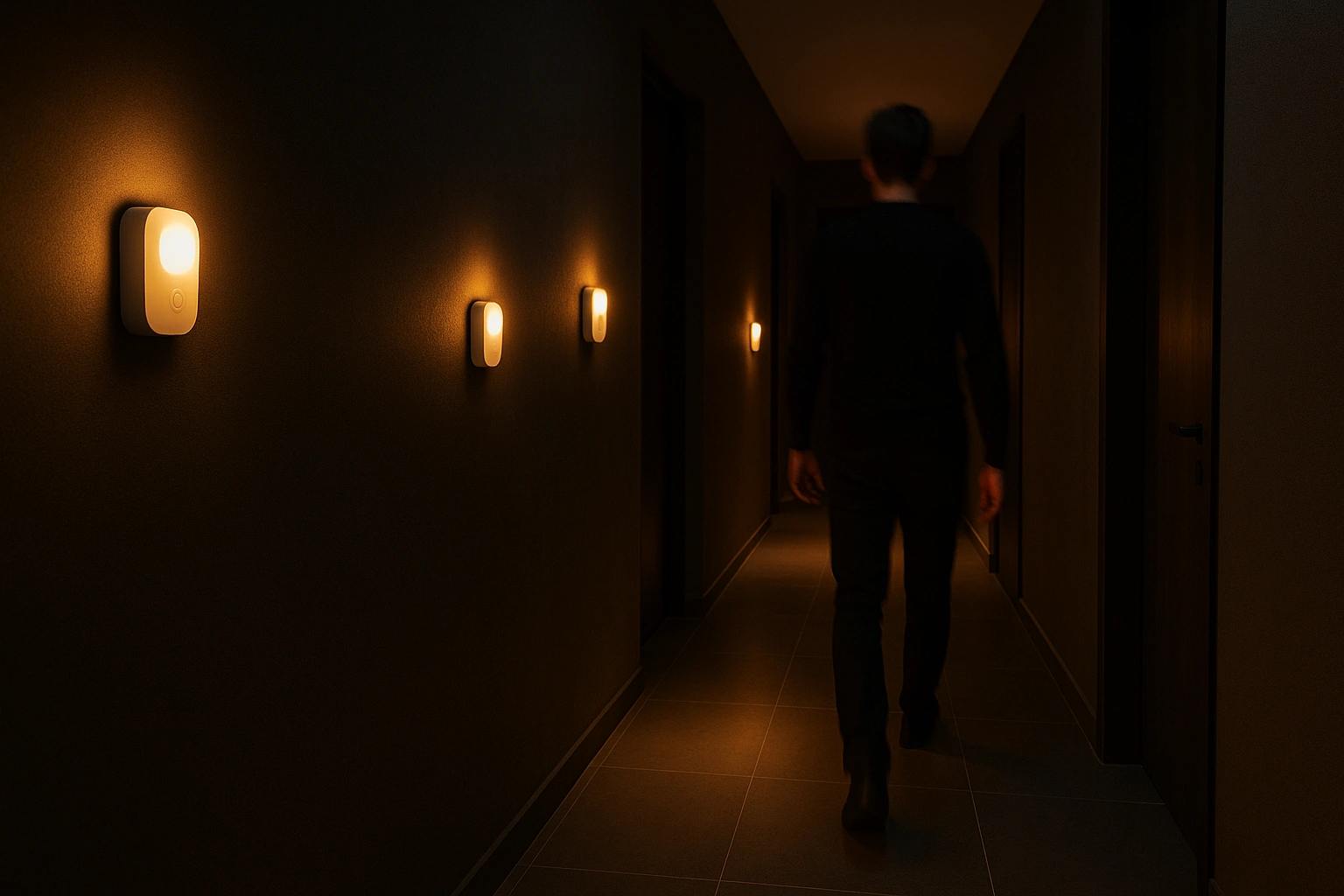
The hallway was even better. Walking through the house at night, the motion sensor lights would gracefully turn on ahead of me and switch off behind me. It was not only efficient but felt incredibly futuristic.
My electricity bill for the next month showed a small but noticeable dip, confirming the impact of targeting just these two areas with motion sensor lights that respond instantly to movement.
| Pros | Cons |
|---|---|
| Significant and measurable energy savings | Can sometimes turn off when you’re stationary (e.g., reading) |
| Hands-free convenience is a huge lifestyle upgrade | Finding the perfect sensitivity setting can take some trial and error |
| Easy to install, especially battery-powered models | Cheaper models may have a limited detection range |
2025 Motion Sensor Light Showdown: Top Product Types
Motion sensor technology comes in several forms. Here’s how they compare:
| Product Type | Key Features | Pros | Cons | Best For |
|---|---|---|---|---|
| Integrated Fixture | Bulb and sensor are one unit (e.g., floodlight) | All-in-one solution, weather-resistant | Requires full fixture replacement | Outdoor security, garages, basements. |
| Smart Motion Switch | Replaces your existing wall switch | Controls multiple existing bulbs at once | Requires electrical wiring installation | Kitchens, hallways, rooms with many lights. |
| Motion-Sensing Bulb | Sensor is built directly into the lightbulb | As easy to install as changing a bulb | Sensor range can be limited by the fixture | Porch lights, closets, lamps. |
| Battery-Powered Light | Stick-on, no wiring needed | Extremely versatile, place anywhere | Requires battery changes, lower brightness | Inside closets, under cabinets, stairways. |
7 Common Mistakes to Avoid with Motion Sensor Lights
Avoid these frequent missteps to get the most out of your investment:
- Poor Placement: Placing a sensor where its view is obstructed by furniture or putting it too close to a heat source (like an HVAC vent) can cause false triggers or missed detections.
- Ignoring Sensor Range: Buying a sensor with a 15-foot range for a 30-foot hallway will create frustrating dark spots. Always match the sensor’s detection cone to the room’s size.
- Setting the Time Delay Too Short: A 15-second delay might seem efficient, but it can be annoying if the lights switch off while you’re momentarily still. Start with a 1-5 minute delay and adjust from there.
- Forgetting Pet Immunity: If you have pets, failing to buy a pet-immune sensor will result in your lights flashing on and off all night.
- Buying Indoor-Only Lights for Outdoor Use: This is a safety hazard. Outdoor lights must have a proper weather-resistance rating (IP rating) to prevent short circuits.
- Not Using the Ambient Light Sensor: Disabling or ignoring the photocell feature means your lights will turn on from motion even in broad daylight, defeating the energy-saving purpose.
- Over-Sensitizing Microwave Sensors: A microwave sensor set to maximum sensitivity might be triggered by movement outside the room (or even outside the house), leading to “ghost” activations.
Expert Tips for a Flawless Setup
“The best motion sensor setup feels invisible. It should anticipate your needs so perfectly that you forget it’s even there. The key is layering: use wide-angle sensors for general areas and more focused sensors for specific tasks, like under-cabinet lighting.”
— Maria Flores, Home Automation Consultant
- Walk-Test Your Sensors: After installation, walk through the space from multiple angles to ensure the sensor triggers exactly where you expect it to.
- Use Manual Override: Choose switches or fixtures that have a manual override mode, allowing you to keep the lights on permanently when needed (like during a party).
- Combine with Smart Schedules: For smart sensors, create rules. For example, have the hallway light turn on to only 20% brightness after midnight to avoid blinding you during a late-night trip to the kitchen.
- Think Beyond On/Off: Pair motion sensors with smart color bulbs. You could have the light turn on to a gentle red at night to preserve your night vision.
Frequently Asked Questions (FAQ)
How much energy can motion sensor lights really save?
Energy savings can be substantial, often between 35% and 75% for lighting costs in a given area. The exact amount depends on the room’s traffic and how often lights were previously left on by mistake. High-traffic, short-duration areas like hallways and closets see the most significant savings.
Can I install motion sensor lights myself?
Yes, many motion sensor lights are designed for easy DIY installation. Battery-powered stick-on lights require no wiring at all. For integrated bulbs or switches, if you’re comfortable with basic electrical work like changing a light fixture, you can likely install them. Otherwise, a licensed electrician is recommended.
Do pets trigger motion sensor lights?
They can, but many modern sensors have features to prevent this. Look for models with adjustable sensitivity or ‘pet immunity’ features, which are designed to ignore motion from objects below a certain size and weight.
What is the difference between PIR and microwave sensors?
PIR (Passive Infrared) sensors detect body heat, making them great for open spaces but they require a direct line of sight. Microwave sensors emit signals and detect their reflection, allowing them to ‘see’ around corners and through thin walls, making them more sensitive but also more prone to false triggers.
Can motion sensor lights be used outdoors?
Absolutely. Outdoor motion sensor lights are one of the most popular security devices. Just ensure the product you choose has an appropriate IP (Ingress Protection) rating (e.g., IP65) to withstand dust, rain, and other weather conditions.